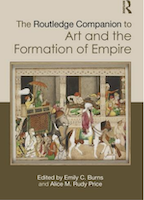
Formation of Empire
Cover Image: Lahore artist (unidentified), Maharaja Ranjit Singh in a Bazaar, ca. 1830–1840. Opaque watercolor on paper, 18 × 21 cm, 2022.252, Metropolitan Museum of Art, Howard Hodgkin Collection, Purchase, Gift of Florence and Herbert Irving, by exchange, 2022. Photo © Ashmolean Museum, University of Oxford.
Routledge Companion to Art and Formation of Empire edited by Emily C. Burns and Alice M. Rudy Price. (Routledge, 2025).
How did art underpin the structures, institutions, and hegemony of imperial powers? What visual and performative indicators, patronage issues, and distribution networks reflected, enabled, and expanded the reach of empires? How did artists move within, between, and in multiple imperial contexts? This anthology examines the various ways that the arts were tools of, complicit in, or reinforcers of imperial projects from the late 18th century to the mid 20th century.
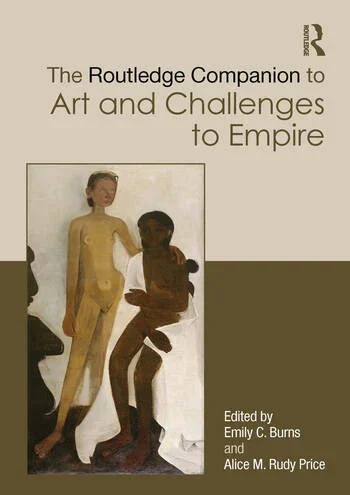
Challenges to Empire
Cover Image: Amrita Sher-Gil, Two Girls, 1939, oil on canvas, 89 x 129 cm, private collection, image courtesy The Estate of Vivan Sundaram.
Routledge Companion to Art and Challenges to Empire edited by Emily C. Burns and Alice M. Rudy Price. (Routledge, 2025).
The authors in this anthology offer case studies that expose the ways that the exhibition, making, and experience of art might expose the fissures in imperial hegemonies, undermine its integrity, or imprint an alternate narrative to discourses of power and authority. Authors address multiple imperial contexts and time periods, reflecting trans-imperial interactions and identifying sites of resistance. Several of the essayists’ interventions enable readers to track refusals of totalizing empire, an awareness of human, ecological and material tolls and agencies alike. They show ambivalence and unease, offering tools to help us grapple with these histories and presents today.

Mapping Impressionist Painting
COVER IMAGE: Nicolae Grigorescu. Andreescu à Barbizon. n.d. Oil on canvas, Height: 61.5 cm (24.2 in); Width: 46 cm (18.1 in), National Museum of Art, Romania. LINK
Mapping Impressionist Painting in Transnational Contexts edited by Emily C. Burns and Alice M. Rudy Price. (Routledge, 2021).
This book offers microhistories related to the transnational circulations of impressionism in the late nineteenth and early twentieth centuries.
The contributors rethink the role of "French" impressionism in shaping these iterations by placing France within its global and imperialist context and arguing that impressionisms might be framed through the mobility studies’ concept of "constellations of mobility." Artists engaging with impressionism in France, as in other global contexts, relied on, responded to, appropriated, and resisted elements of form and content based on fluid and interconnected political realities and market structures. Written by scholars and curators, the chapters demand reconsideration of impressionism as a historical construct and the meanings assigned to that term.
This project frames future discussion in art history, cultural studies, and global studies on the politics of appropriating impressionism.
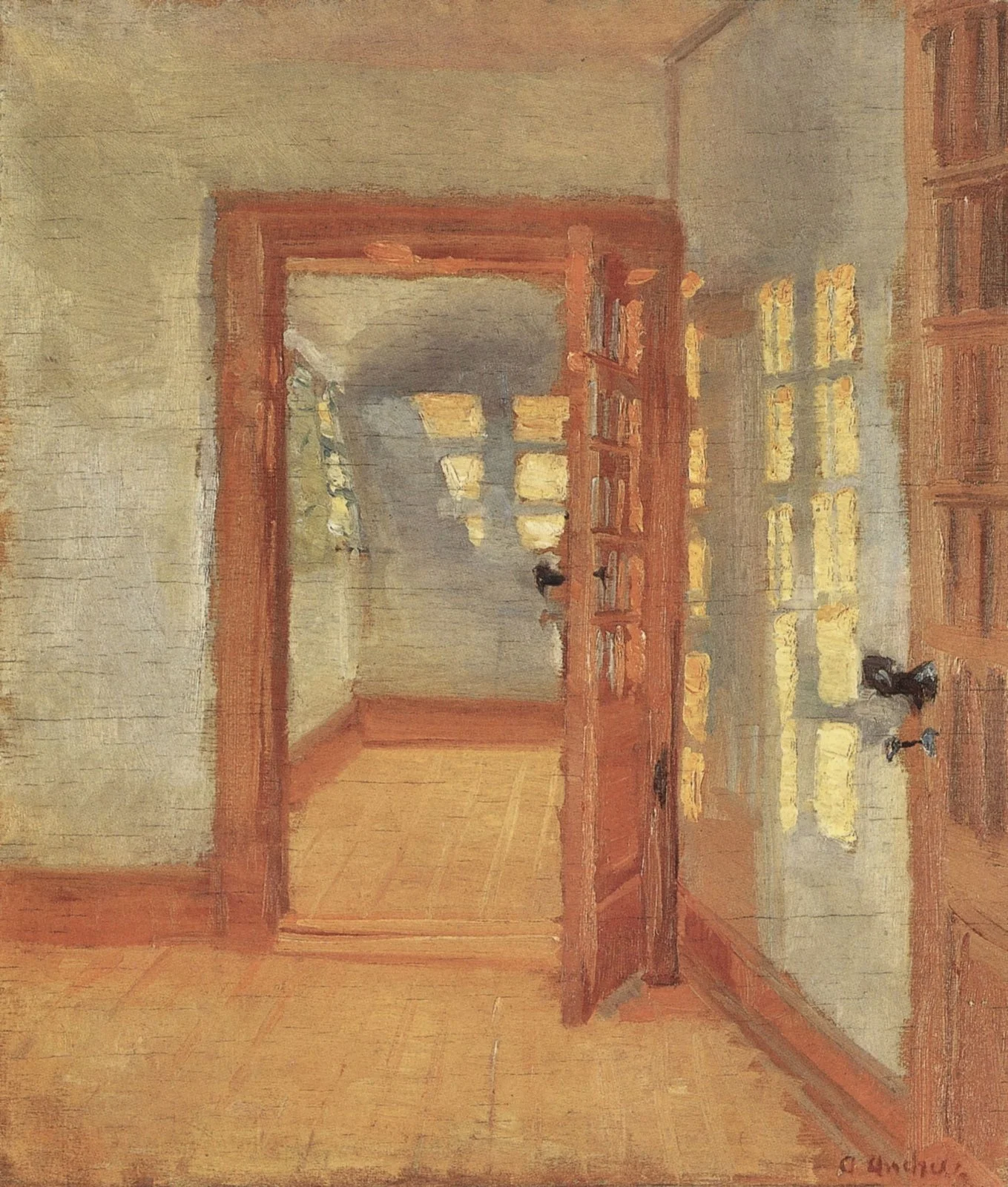
Reframing Anna Ancher
Reframing Anna Ancher: Danish Symbolist, Modernist and Independent Artist.” Ph.D. Dissertation. Temple University, Tyler School of Art. http://search.proquest.com/docview/1548981937. (Spring 2014)
Historical analysis of artist Anna Ancher distorted her formal innovations and misidentified the cultural context due to a significantly biased lens, dominated by the written records of her husband and keyed to the goals and aspirations of the Modern Breakthrough. The chronological approach of my thesis facilitates examination of Ancher’s art in tandem with shifts in modernism and important relevant contextual developments beyond the immediate art colony in Skagen. Ancher never fully embraced any single modernist tendency, but through most of her life, a significant body of her painting conversed with the most recent discussions of what was new, experimental or innovative. Photographs and painted portraits of the artist indicate both her awareness of shifting fashions from the urban centers and of the associated change in gender roles, design concerns and normative expectations that accompanied the sartorial variations. Ancher kept abreast of cosmopolitan developments in art, theory and culture.